
About Us

Reimagining Infrastructure Detection and Remediation with Asama’s AI Infrastructure Engineer.

Core Capabilities

Reimagining Infrastructure Detection and Remediation with Asama’s AI Infrastructure Engineer.

About Us

Reimagining Infrastructure Detection and Remediation with Asama’s AI Infrastructure Engineer.

Our Mission

We exist to empower infrastructure teams to move beyond manual operations and monitoring, and use Asama - the world’s first AI Infrastructure Engineer as their AI teammate. Asama turns "observability" into "actionability" and ensures high reliability, performance and compliance across infrastructure systems.

The "Why"

Modern infrastructure has outgrown human-scale operations. Servers, GPUs, firmware, OS, hypervisors et al evolve independently, across vendors and generations. Telemetry is fragmented, spread across tools and databases with no shared context. Monitoring & Alerting systems try to paper over this complexity with dashboards, thresholds, and scripts; but end up being noisy, brittle, and reactive.

Asama treats heterogeneity as a first-class constraint; normalizing data from different sources into a unified memory layer that understands vendor diversity, mixed SKUs, aging hardware, and constant drift.

Detection & RCA: Beyond Thresholds and Dashboards. Traditional monitoring depends on static thresholds, hand-tuned rules, and dashboards. When issues emerge, engineers must manually stitch together signals across layers. Correlation & RCA is ad hoc and non-methodical. Asama detects issues by correlating signals across the stack. Detection, correlation & RCA become continuous and contextual, not alert-driven.

Remediation Is the Harder Problem. Even when issues are understood, remediation is largely tribal knowledge driven: ad-hoc runbooks, one-off scripts, and fragile automations that age quickly as fleets evolve. Scaling remediation requires coordination, approvals, maintaining automations and often manual execution. Our focus is on Remediation as a system capability. Asama’s remediation workflows are agentic but controlled with human-in-the-loop where needed, autonomous where safe.

Future of Infrastructure Management. Asama turns into a flywheel. Faster root-cause discovery improves reliability. Reliable remediation reduces repeat incidents. Fewer incidents reduce operational load. Over time, buffers shrink, and senior engineers are free from ad hoc asks. Infrastructure becomes a stable, invisible foundation that evolves safely alongside the software it supports.

The "Why"

Modern infrastructure has outgrown human-scale operations. Servers, GPUs, firmware, OS, hypervisors et al evolve independently, across vendors and generations. Telemetry is fragmented, spread across tools and databases with no shared context. Monitoring & Alerting systems try to paper over this complexity with dashboards, thresholds, and scripts; but end up being noisy, brittle, and reactive.

Asama treats heterogeneity as a first-class constraint; normalizing data from different sources into a unified memory layer that understands vendor diversity, mixed SKUs, aging hardware, and constant drift.

Detection & RCA: Beyond Thresholds and Dashboards. Traditional monitoring depends on static thresholds, hand-tuned rules, and dashboards. When issues emerge, engineers must manually stitch together signals across layers. Correlation & RCA is ad hoc and non-methodical. Asama detects issues by correlating signals across the stack. Detection, correlation & RCA become continuous and contextual, not alert-driven.

Remediation Is the Harder Problem. Even when issues are understood, remediation is largely tribal knowledge driven: ad-hoc runbooks, one-off scripts, and fragile automations that age quickly as fleets evolve. Scaling remediation requires coordination, approvals, maintaining automations and often manual execution. Our focus is on Remediation as a system capability. Asama’s remediation workflows are agentic but controlled with human-in-the-loop where needed, autonomous where safe.

Future of Infrastructure Management. Asama turns into a flywheel. Faster root-cause discovery improves reliability. Reliable remediation reduces repeat incidents. Fewer incidents reduce operational load. Over time, buffers shrink, and senior engineers are free from ad hoc asks. Infrastructure becomes a stable, invisible foundation that evolves safely alongside the software it supports.

The "Asama Way"

Remediation First: Detection, RCA, and automation are subordinated to one goal: executing safe, repeatable fixes at fleet scale.

Deep Stack Context: Asama builds and maintains a unified memory layer, replacing fragmented telemetry and human stitching with machine-level understanding. Agentic Autonomy: Moving beyond static scripts to dynamic agents that can plan, reason, and adapt execution.

Human-Centric NLP: Interacting with complex infrastructure should be as simple as a conversation in plain English.

Continuous Compliance as State: Security posture and patch levels are tracked as part of infrastructure state, eliminating episodic audits and P0-driven remediation cycles.

The "Asama Way"

Remediation First: Detection, RCA, and automation are subordinated to one goal: executing safe, repeatable fixes at fleet scale.
Deep Stack Context: Asama builds and maintains a unified memory layer, replacing fragmented telemetry and human stitching with machine-level understanding.
Agentic Autonomy: Moving beyond static scripts to dynamic agents that can plan, reason, and adapt execution.
Human-Centric NLP: Interacting with complex infrastructure should be as simple as a conversation in plain English.
Continuous Compliance as State: Security posture and patch levels are tracked as part of infrastructure state, eliminating episodic audits and P0-driven remediation cycles.

Our Founders

Sumeet and Jain Johny (JJ) first joined forces over a decade ago at Flipkart (a Walmart subsidiary), where they were responsible for building and scaling the company’s infrastructure. As Head of Infrastructure and Lead Architect respectively, they co-architected and scaled Flipkart’s Private Cloud - the backbone powering one of the world’s most complex e-commerce stacks and its diverse group of companies.

Across their careers at companies like Yahoo, InMobi, and Hike, they experienced first-hand how infrastructure operations break down at scale: fragmented telemetry, slow root-cause discovery, and remediation that relies too heavily on human expertise and brittle automation.

In 2024, they left Flipkart to focus on what they saw as the next inevitable shift in building the AI Infrastructure Engineer. Joined by Manish with a business background, they founded Asama AI.

Asama is the product of systems they’ve built, failures they’ve lived through, and operational pain they chose not to accept as inevitable.


Sumeet

Founder & CEO
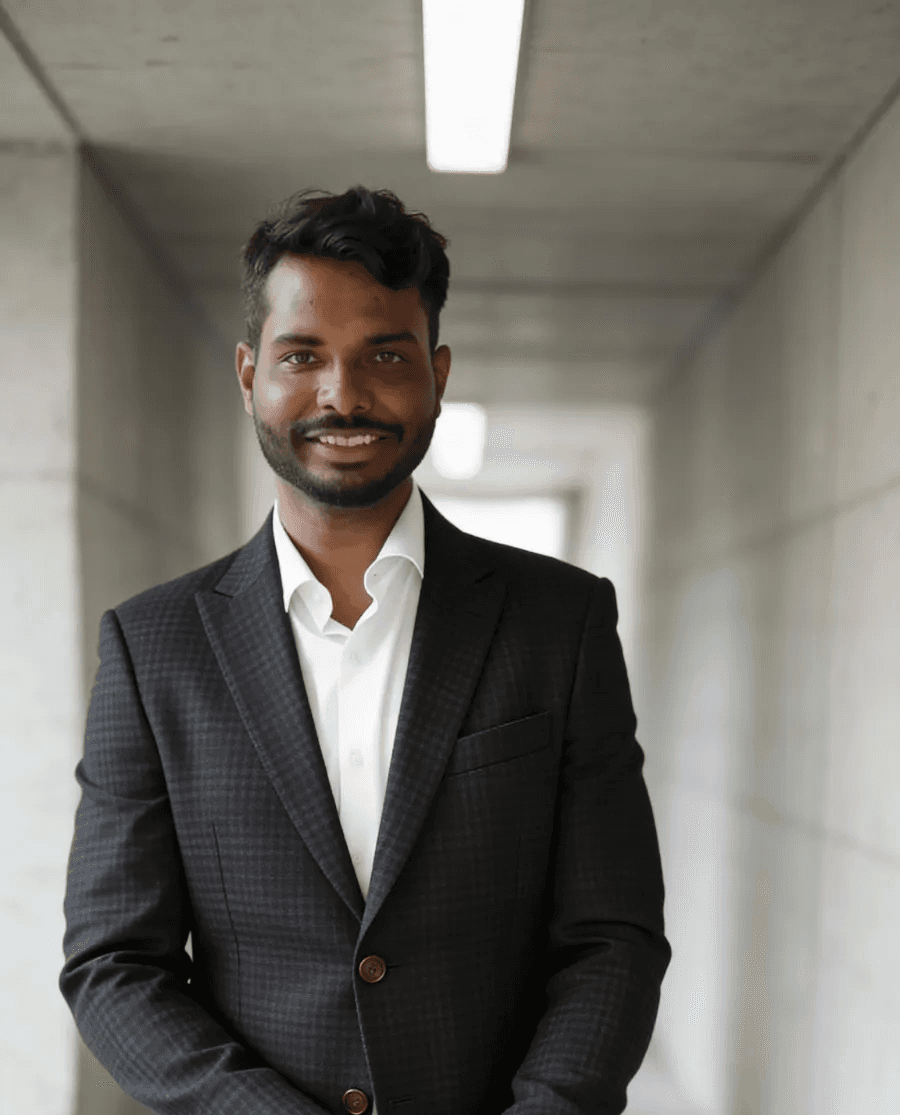
Sumeet

Founder & CEO

Sumeet

Founder & CEO

Manish

Founder & CBO
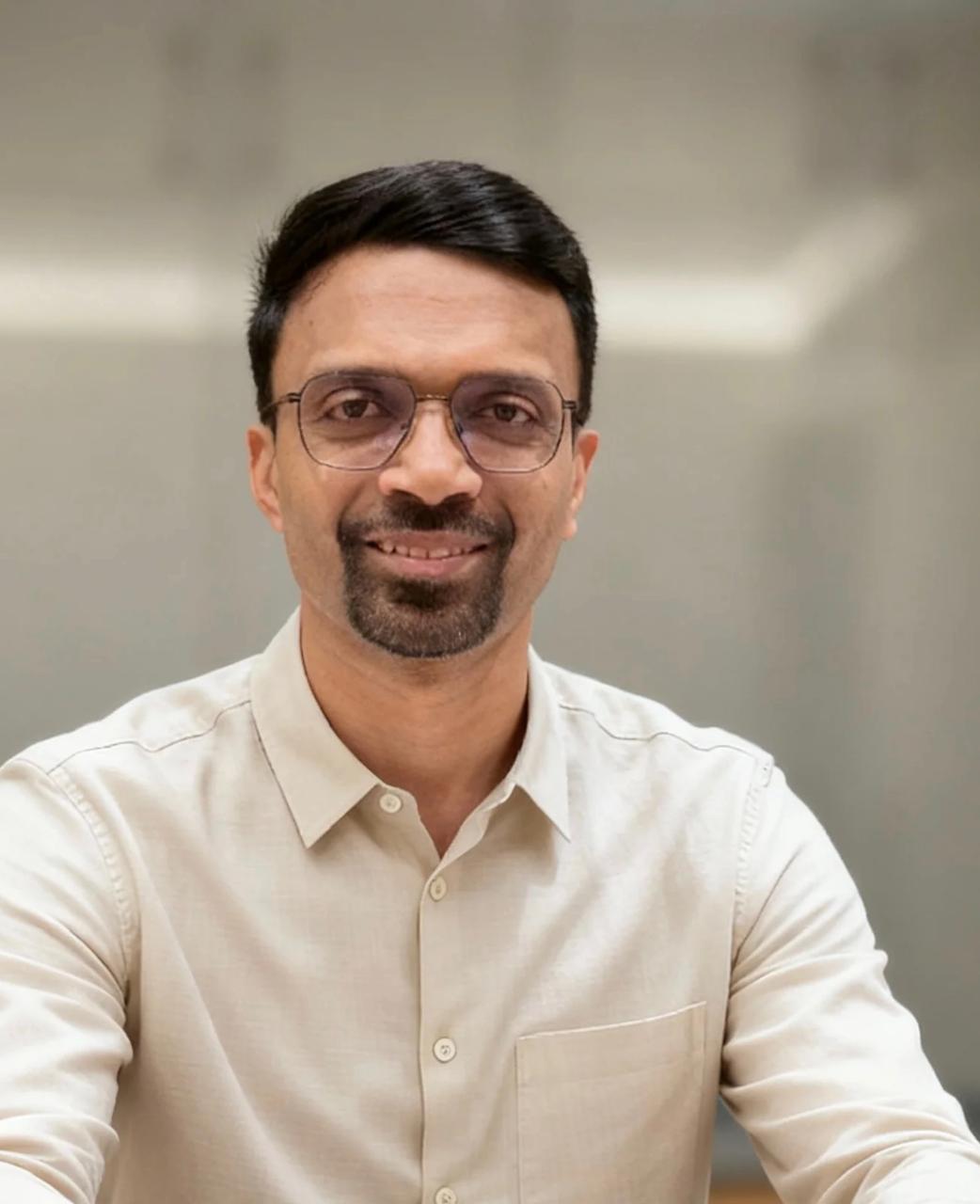
Manish

Founder & CBO

Manish

Founder & CBO

Jain Johny (JJ)

Founder & CTO

Jain Johny (JJ)

Founder & CTO

Jain Johny (JJ)

Founder & CTO

Join

the Team

If you're interested in joining our team, please let us know your skills and experience, and we'll be happy to discuss potential opportunities with you.